Currency Exchange in Serbia: Menjačnice, P2P Trades and Avoiding Scams
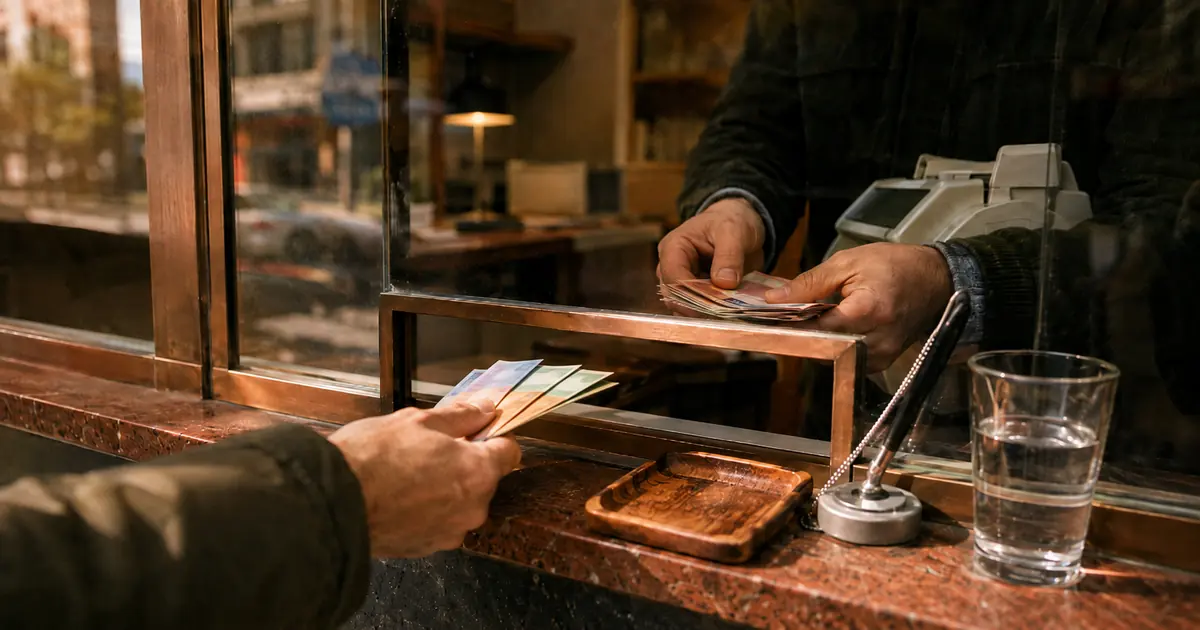
A regular menjačnica in Belgrade will happily exchange euros and dollars, but rubles are a different story: there is almost no official channel, so the exchange moves into chats and private arrangements. We look at what options exist, where scammers hide, and how to trade more safely between people.
Menjačnice: what they exchange — and what they don’t
Menjačnice — currency exchange offices on almost every corner in Belgrade and Novi Sad — exchange euros, dollars, francs and pounds at rates better than the banks and with no commission. Cash rubles are a different matter: only a handful of offices take them, and the rate there is noticeably worse than the market one, because Serbian banks barely work with rubles and an exchange office has nowhere to pass them on to. If you have euros or dollars, the question is settled — just head to the nearest menjačnica. If you have rubles, that’s where the real options begin.
How people transfer money from Russia: an overview of methods
- Cards issued by Russian banks do not work in Serbia — not at ATMs, not in shops;
- SWIFT transfers from certain banks are technically possible, but are slow, come with fees and don’t reach every Serbian bank;
- cryptocurrency is a workable but skill-demanding route: buy it for rubles in Russia, sell it for dinars or euros in Serbia;
- P2P exchange is the most common scenario: one person transfers rubles to a Russian card, the other hands over cash dinars or euros here.
Telegram chats: where exchange happens now — and why it’s risky
Most P2P exchange happens in Telegram chats along the lines of “currency exchange Belgrade.” It works, but the format has structural problems: an anonymous person with no track record can vanish after the transfer, a “great rate” offered in a DM is a classic lure, and finding yesterday’s offer in a stream of hundreds of messages is nearly impossible. The scam pattern is always the same: you’re rushed, asked to transfer first, and pulled out of the group chat into a private message.
Currency exchange listings on Ovdix
Ovdix has a dedicated section for currency exchange in Serbia: people post listings like “exchanging rubles for dinars” or “buying euros for rubles,” with an amount and a city. Unlike a chat, a listing doesn’t get buried in a stream, the author has a visible profile with a registration date and other listings, and you can negotiate in the built-in chat with automatic translation — handy when the other side writes in Serbian. Montenegro has a matching section for euro exchange. You can post your own offer for free in a couple of minutes.
Rules for safe P2P exchange
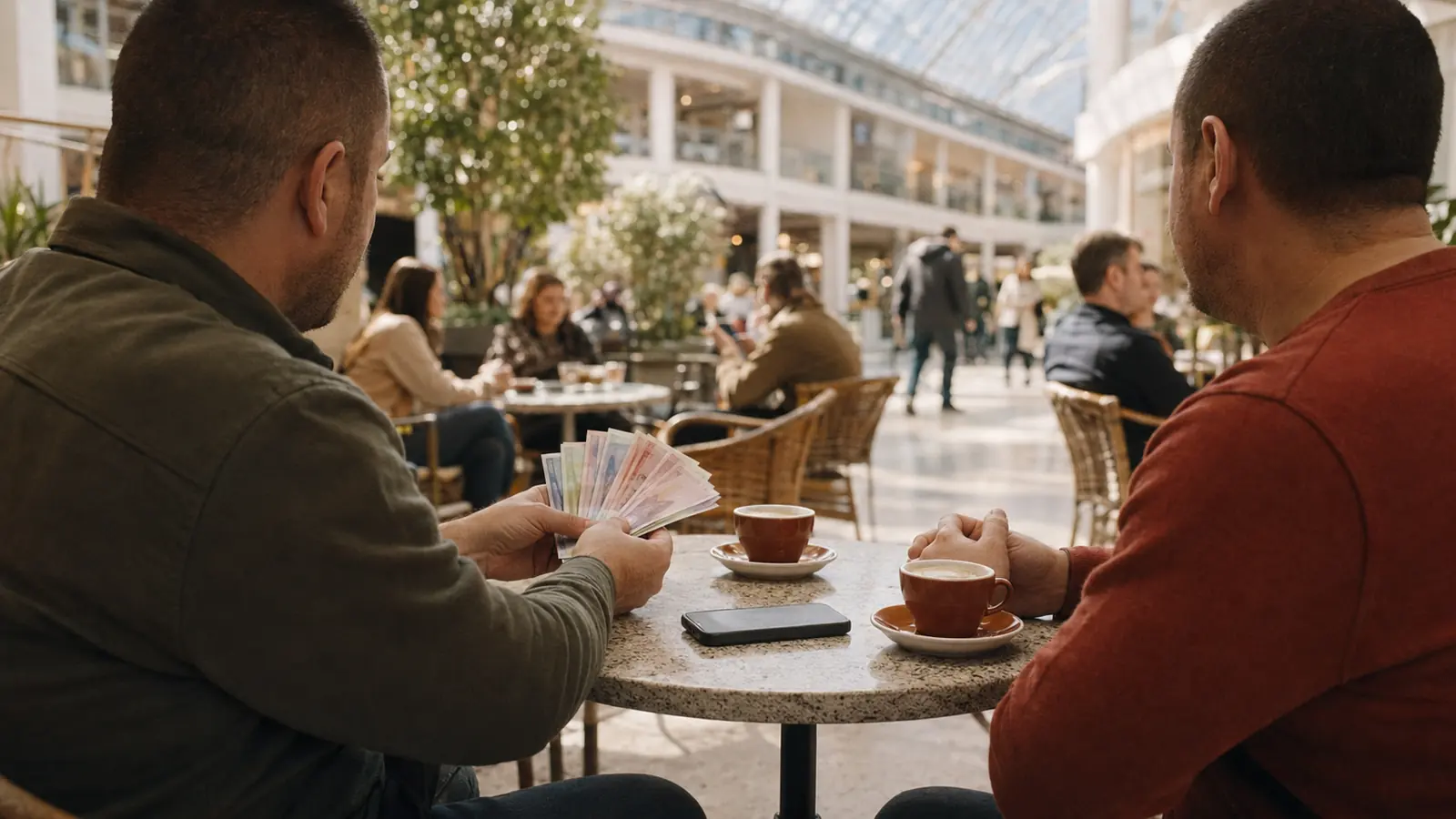
- Meet in person, in a public place — a café, a shopping mall; split large amounts into parts;
- check the other side: their listing history, how long the profile has existed, willingness to get on a call;
- compare the rate against the interbank rate at the time of the deal — a rate that’s “too good” is bait;
- never transfer first to a stranger “to hold the deal” — money and cash should change hands at the same time;
- the same general principle applies as with any deal with a stranger: safety rules for online classifieds.
Frequently asked questions
Do exchange offices in Serbia accept rubles?
Very few, and at a rate noticeably worse than the market. The reason is technical: Serbian banks barely deal in rubles, so an exchange office has nowhere to pass them on. Euros, dollars, francs and pounds are exchanged everywhere, commission-free and at a better rate than banks give.
Do Russian bank cards work in Serbia?
No — neither in ATMs nor in shops. That leaves four working options: bring cash, a SWIFT transfer from one of the few banks that still allow it (slow and with fees), crypto, or a peer-to-peer exchange with someone locally.
Can I pay in euros instead of dinars in Serbia?
Not in shops, cafés or public transport: the official currency is the dinar and that is what prices are settled in. Euros mostly matter when renting a flat, where landlords often quote in them. Change cash at an exchange office — the rate is better than at a bank and there is no commission.
How do I safely exchange money with a private person?
Meet in person in a busy place, split a large amount into several smaller exchanges, and never transfer first "to reserve the rate" — the money and the cash have to change hands at the same moment. Check the rate against the interbank one: a rate that looks too good is bait, not luck.